
Eco-tourism is a promise that most places don’t keep
The word has become elastic enough to mean almost anything. A solar panel on an otherwise extractive resort. A recycling bin in a hotel that sources nothing locally. Travelers who care about this — and more do every year — have learned to be skeptical of the label.
Yaguari Glamping earns the description in the way that actually matters: not through marketing, but through the structure of how it operates.
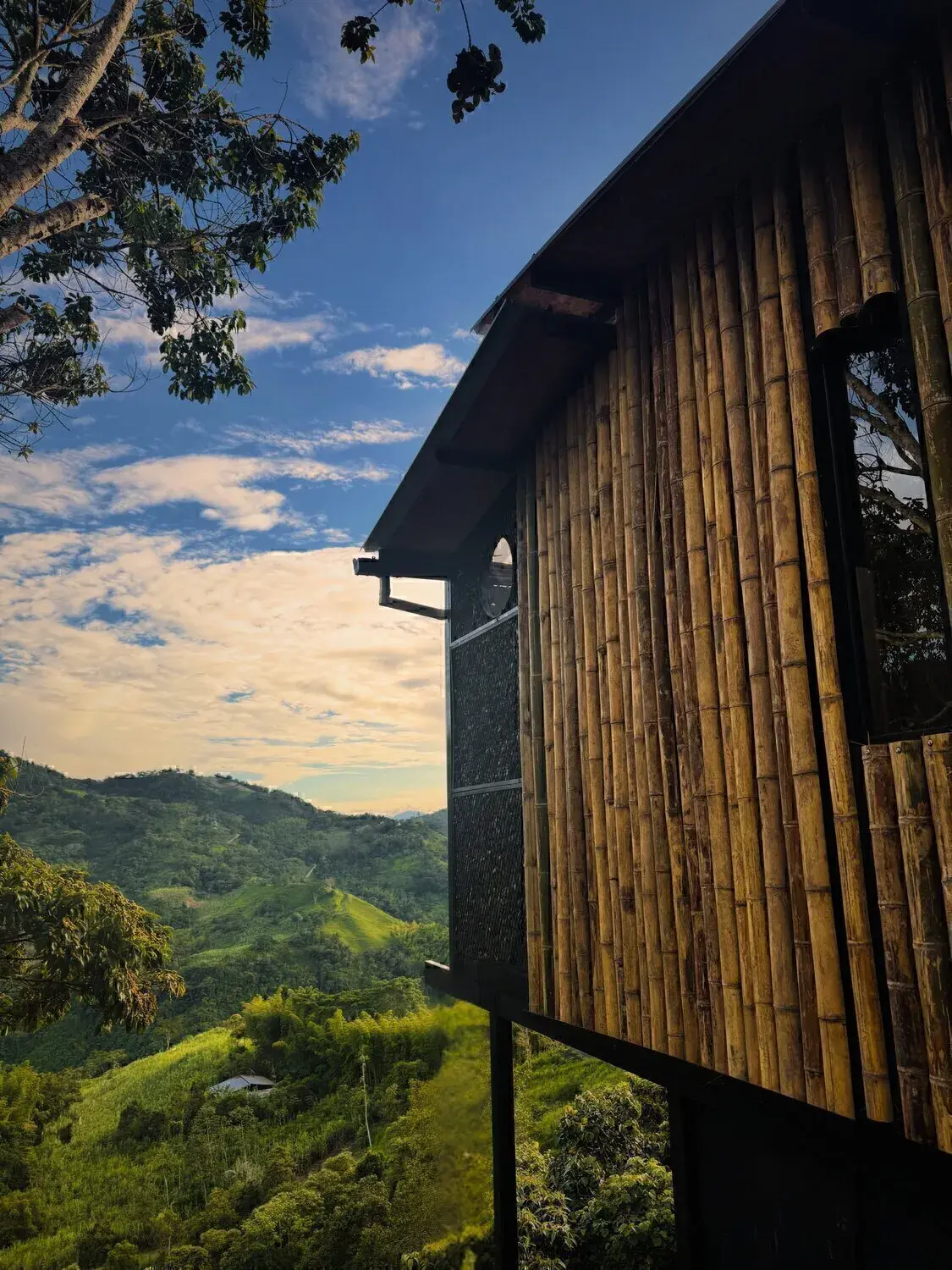
The Bagüe cabin was designed to belong here
The Bagüe cabin offers king bed and sofa bed for up to four guests, private bathroom with hot water, fully equipped kitchen, private outdoor jacuzzi, terrace with a swing and open-air dining area, a catamaran hammock, and a private gas grill. It was designed to integrate into the hillside rather than impose on it. Natural light and cross-ventilation do the work that air conditioning would otherwise do. The footprint is deliberate, limited, and in proportion to what the land can absorb.
This is not asceticism. The point is that comfort and low-impact design are not in tension if the design is thoughtful from the start. Yaguari was built this way from the beginning — which is different from, and better than, retrofitting sustainability onto a property that was never designed for it.
The Gualivá region is worth protecting
Colombia is one of the world’s most biodiverse countries — a status that carries both pride and responsibility. The Gualivá region of Cundinamarca, where Vergara sits about 2 hours from Bogota on a route combining paved road with a short unpaved section, offers a concentrated version of the Andean ecosystem: shifting altitudes, river canyons, cloud forest patches, and bird species characteristic of the Colombian Andes.
Staying in this region means choosing a destination that benefits from visitors who care about it. Independent local operators may offer canopy, rappelling, canyoning and hikes. Check the route, availability and environmental guidance directly with the operator.
What responsible travel looks like in practice
It looks like staying somewhere that built its infrastructure with the landscape in mind, operates at a scale the land can sustain, and connects guests to the region rather than insulating them from it.
The cabin is entirely private — no shared lobbies, no crowds. The kitchen is equipped for self-catering, which means guests can source ingredients locally in Vergara and the surrounding area. Check-in is at 2:00 PM, check-out at 12:00 PM. The property is pet-friendly for up to three pets with prior arrangement.
Wi-Fi is shared through a cellular 4G modem rather than a fixed internet line. Mobile carrier coverage and availability vary in the mountains, so the connection may be intermittent and is best treated as basic connectivity.
Have questions about what to bring or how to get there? The frequently asked questions page covers logistics, road conditions, and more.
Responsible travel is not complicated. It is choosing places that were built to last, in regions worth visiting, at a pace that lets the place register. Yaguari is that place.